


- This event has passed.
SAKI Joins National Commemoration of the International Day of Zero Tolerance for FGM in Taita-Taveta
February 20 @ 7:42 am
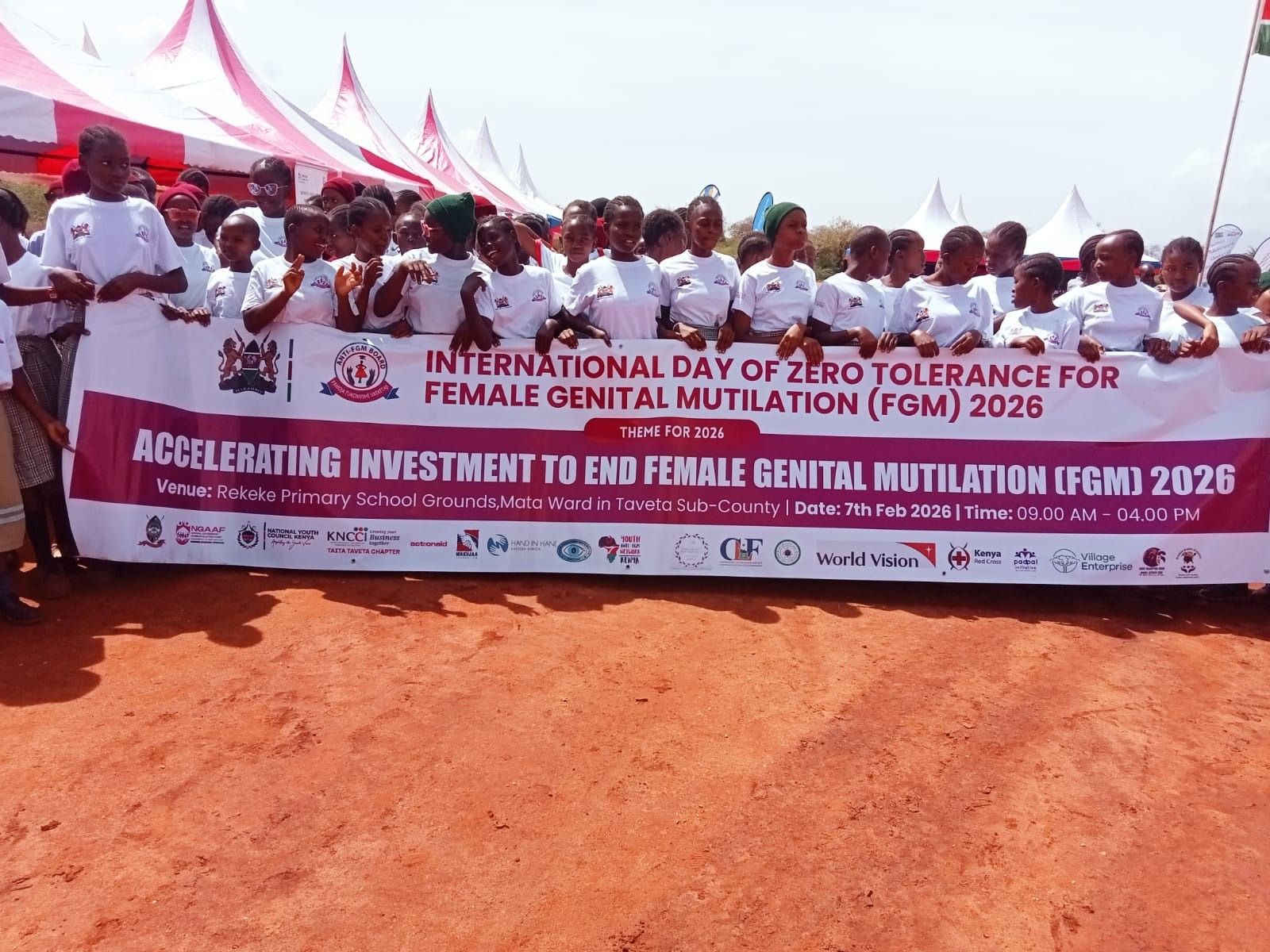
On 7th February 2026, a three-member team from Save A Kenyan Initiative (SAKI) joined national and county stakeholders in Taita-Taveta County to mark the International Day of Zero Tolerance for Female Genital Mutilation (FGM). Convened by the Anti-FGM Board, the event was held at Rekeke Primary School in Taveta Sub-County, an area selected due to its FGM prevalence rate of 17%, slightly above the national average of 15%.
Established by the United Nations General Assembly in 2012 and observed annually on 6th February, the International Day of Zero Tolerance for FGM serves as a global platform for governments, civil society, and communities to reaffirm their commitment to ending a practice that affects an estimated 230 million girls and women worldwide. This year’s theme, “Towards 2030: No End to FGM Without Sustained Commitment and Investment,” aligns with Sustainable Development Goal 5, Target 5.3, which calls for the elimination of all harmful practices by 2030.
The commemoration brought together senior national and county leaders, including the Cabinet Secretary and Principal Secretary for Gender, Culture and Children Services, the leadership of the Anti-FGM Board, the Deputy Governor of Taita-Taveta County, and the Member of Parliament for Taveta Constituency. In her keynote address, the Cabinet Secretary underscored the need to accelerate investment in education, protection systems, and community-based interventions in high-prevalence counties. She reaffirmed the Government of Kenya’s commitment to protecting the rights and dignity of women and girls across the country.
Despite progress, projections indicate that more than 500,000 girls and women in Kenya could still undergo FGM by 2030 if coordinated and intensified efforts are not sustained.
Beyond Enforcement
Stakeholders emphasized that enforcement alone cannot eliminate FGM. While National Government Administrative Officers (NGAO) play a critical role in implementing the law, lasting change requires a balanced approach, combining legal action with sustained public awareness, community dialogue, and grassroots advocacy. Transforming attitudes and social norms remains central to long-term success.
SAKI’s Commitment
SAKI remains steadfast in strengthening community-based prevention, building resilience, and supporting protective ecosystems that safeguard girls and young women from harmful practices. We believe that collaboration is essential and welcome partnerships with like-minded organizations, leaders, and community actors committed to ending FGM.
Ending FGM requires sustained commitment, strategic partnerships, and investment at every level, national, county, and community.
Join us in advancing a collective effort toward a Kenya free from FGM.